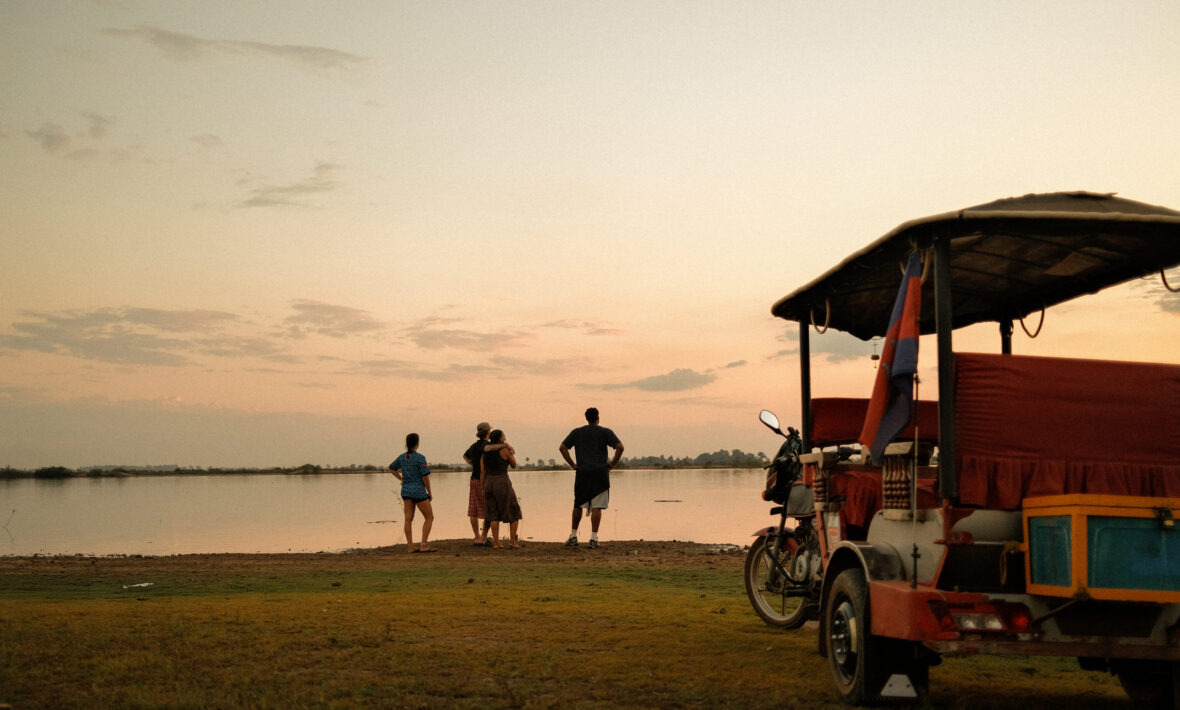
Travel delivers adventure and unforgettable experiences, but more often than not this comes alongside some amount of stress and discomfort.
These feelings are a natural reaction to being in a new, unfamiliar place, and battling through them often leads to the best kinds of travel stories — and personal growth to boot. However, sometimes there are things well beyond your control that necessitate more caution. This is especially true of major global events, like the ongoing war in Iran.
As a result of this instability in the Gulf, plenty of people are asking: is it safe to travel right now? While each individual will have to answer that question themselves, we address key concerns below, and offer some tips to ensure that you can travel to the fullest given the ongoing circumstances.
What’s actually changed when it comes to global travel right now?
Image source: Contiki
The upheaval occurred in February of this year, when the US and Israel launched military strikes against Iran. In retaliation, the Gulf nation began shooting missiles across the region, targeting key regional travel hubs like the UAE. Additionally, the Iranian regime has blocked off the Strait of Hormuz, a major shipping route for oil, leading to rocketing fuel prices across the globe.
Although the Trump administration has given multiple, often conflicting reasons for the assault, what is clear is that the attacking forces were not expecting the protracted fight the war has become. As a result of this instability, as well as the associated increased fuel prices, airline travel has been severely impacted.
These shockwaves haven’t been confined to the MENA region, as Gulf hubs such as Dubai, Abu Dhabi, and Kuwait serve as vital links to the Eastern Hemisphere.
There is reason for travellers to be optimistic. A temporary ceasefire is now in place, and even before the agreement was reached, the UAE’s advanced defense systems allowed a significant number of flights to continue operating safely from Dubai and Abu Dhabi.
However, there is still ongoing disruption, and the volatile nature of the situation means there’s plenty of reason to advise caution.
All of these travel concerns can be stressful, even as flights continue to ramp up. However, they don’t have to mean the cancelling of a long-awaited holiday, especially if you follow some key travel safety tips like the ones we’ve detailed below.



What travellers should check before booking an overseas trip in 2026
Image source: Photo by Theang Rathana on Unsplash
The main thing travellers should check before booking is advice from their government about the country they are travelling to. Your country’s foreign office will have the most up to date information about the relative safety of various regions across the globe, and how risky it is to travel there.
This advice should be followed under all circumstances. Continuing with a trip to a location flagged as not suitable for travel will exponentially increase your odds of being involved in something dangerous. Even if there is no disruption, insurance is void if bought for a location after it has been flagged as risky by a government.
If you struggle to find comprehensive information from your country’s government, the UK Foreign Office website and Australia’s Smartraveller are both clearly laid out and easy to use.
And ALWAYS check your travel insurance
The next important travel tip is to check your insurance policy. Some will not offer compensation if war breaks out again while you are in the region, while others will, so read the fine print.
If a policy is bought before a country is put on a no-travel list by a governmental body, more often than not it will allow you to claim some money back for a cancelled trip. Additionally, flights that are cancelled due to operational reasons like fuel shortages, rather than events like missile strikes, are usually covered by insurance, so this is worth checking.
Even if your insurance doesn’t cover everything you’d want it to, sometimes you can be pleasantly surprised by flight and hotel booking policies. You might be entitled to a booking credit, or even a full or partial refund, depending on the terms of the company you booked with.
The most important thing is to interrogate how you’re feeling about everything. If you ask yourself: “Is it safe to travel right now?” and can truly answer yes, then you should go ahead. But if there is a persistent nagging feeling that you just can’t shake, then there is no shame in cancelling.
Smarter ways to travel in 2026: Group travel, pre-planned activities, and slowing down

Image source: Contiki
If you do make the decision to go on your 2026 sojourn, there are plenty of travel safety trips you can take on to reduce your risk.
Travelling in groups is one of the best ways to stay secure. Not only is there safety in numbers, but pre-planned activities run by established companies have traveller safety at the heart of everything they do. Group travel through an agency also reduces the stress of organisation, leaving experts to navigate the travel concerns we’ve mentioned above.

Travelling overland can negate the issues caused by flights being less reliable than usual. This has the added benefit of allowing you to take in more of a country, and the opportunity to visit places you might have zoomed over if you were travelling via plane.
Finally, always keep an eye on local security alerts and wider news about ongoing conflicts. There are plenty of apps and services that will send you relevant information about the area you’re in and your travel route, meaning you can stay safe with minimum fuss.
Booked a trip with us? Check out Contiki’s FAQs for anything regarding your upcoming trips!