 Photo: Rhiannon Bryant
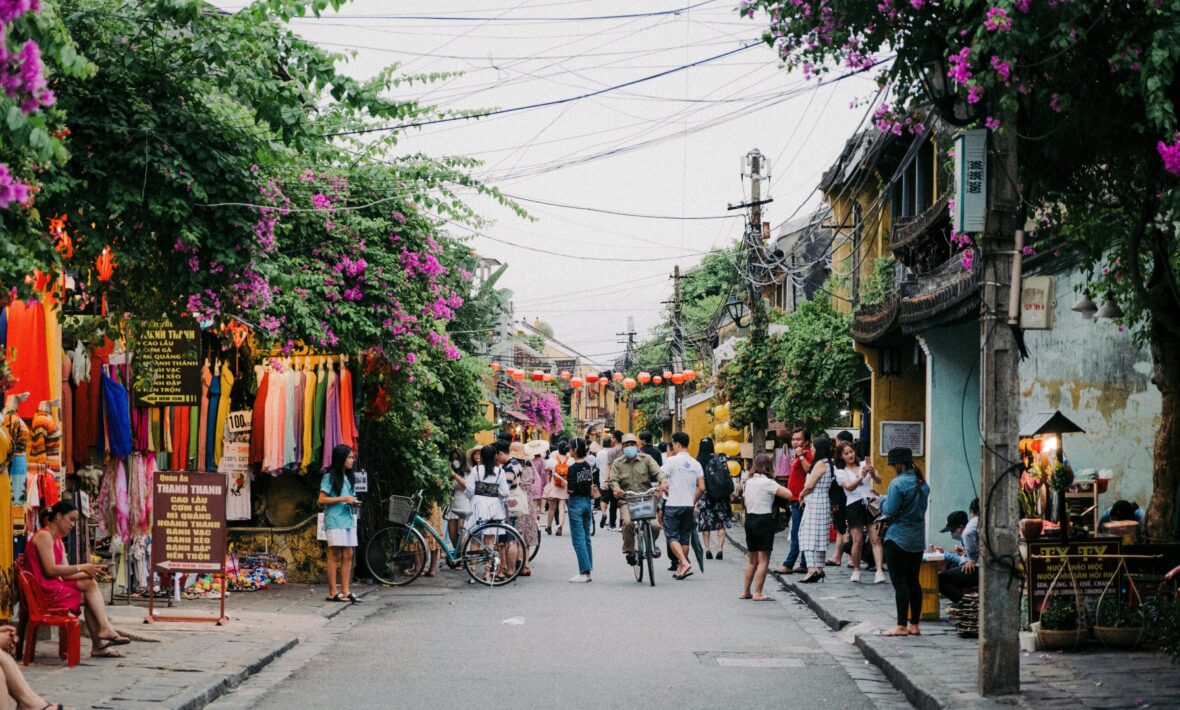
Southeast Asia is a tapestry of eleven countries, each bursting with its own mix of religions, cultures, and histories. Centuries of migration, trade, and empire have woven a rich blend of cuisines, traditions, and customs across the region. From epic tales of war and resilience to stories of liberation and triumph, the region’s history comes alive in every city, village, and street corner.
The exotic region is a playground for the curious: wander bustling streets and ancient monuments on guided walking or bicycle tours, hop on a jeep for hidden gems, and dive into local culture with food tastings, cooking classes, water puppet shows, and intimate folk performances with traditional instruments.
And beyond the cities, nature steals the show, from exploring jagged limestone karsts, serene rivers, lush mountains, volcanic landscapes, and sun-soaked beaches by boat, on foot, or beneath the waves while scuba diving. Adventure really is everywhere to be found, from the extreme side to the more mild.



What are the most popular Southeast Asian tourist attractions?
There are so many fantastic tourist attractions in Southeast Asia, but Angkor Wat, Ha Long Bay, and Chiang Mai’s Old Town are probably three of the most visited.
What is the best time to visit Southeast Asia?
November to March is usually the best time to visit Southeast Asia. This is when the weather is sunny and dry, and temperatures are not so hot, but you may get to experience fewer crowds during the rest of the year.

1. Palawan, the Philippines
Best time to visit: One of the best times to visit Palawan is April, just before the rainy season.
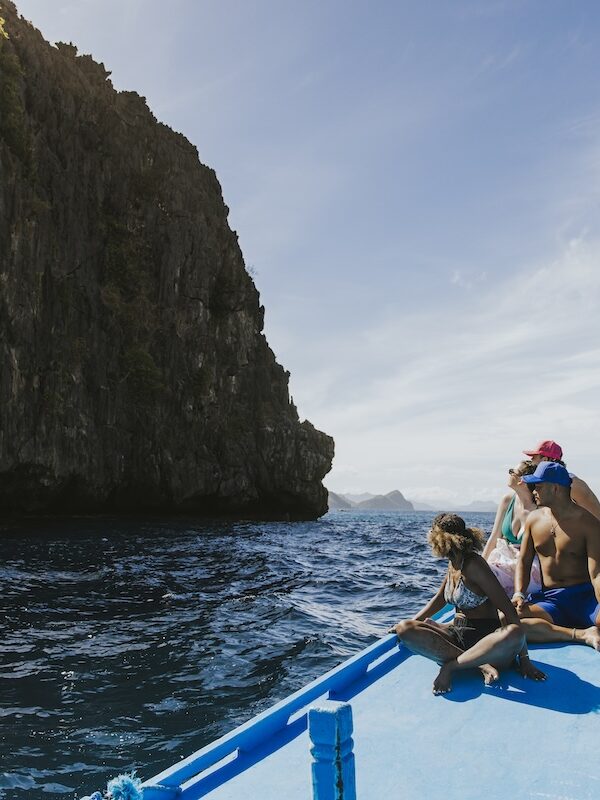
The Philippines has become one of the most talked about travel destinations in Asia, and we can see why with its beautiful white beaches. It’s definitely one of the best Southeast Asian countries to visit and you CANNOT miss a trip to Palawan. Palawan is one of the larger islands of the Philippines and it is a traveller’s haven. You could easily spend weeks here exploring all of the hidden beaches, taking boat trips around the islands and islets, exploring the crystal lagoons, scuba diving and snorkelling to see life under water, and watching the sunsets every afternoon.
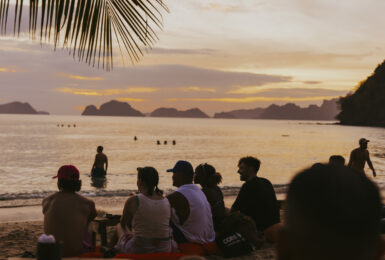
One of the best places to catch sunset is Las Cabanas Beach in El Nido. And if you’re not afraid of early mornings, then the sunrise hike to Taraw Peak is a must do for your bucket list. Palawan is renowned for its breathtaking landscapes and seascapes, and the most popular destinations visited from here are El Nido and Coron.
From underground river cruises, diving in Coron around the old warship ruins, exploring secluded beaches by kayak, and trying out Balabac for your off-the-beaten-track activities with limited tourists around, you won’t get bored on this kind of trip. Hot tip: it’s worth testing out your diving skills at one of the UNESCO World Heritage Sites: Tubbataha Reef.
Palawan is also actually home to another UNESCO World Heritage Site, the Saint Paul Subterranean River National Park. This underground river system is surrounded by well-preserved limestone formations, and a forest full of wildlife, making it a must visit destination for nature lovers.
Pros and cons
Palawan is idyllic, and has a wealth of cultural and natural treasures to explore. However, it isn’t as well connected as similar destinations in nearby countries like Thailand and Indonesia, so getting here is a little harder. So, tbh, doing a group tour can ease your planning stress!
Top gems
Palawan is renowned for its breathtaking landscapes and seascapes, and the most popular destinations visited from here are El Nido and Coron.
Who is this perfect for?
Sunset and scuba lovers and explorers who are keen to go a little off-the-beaten track.
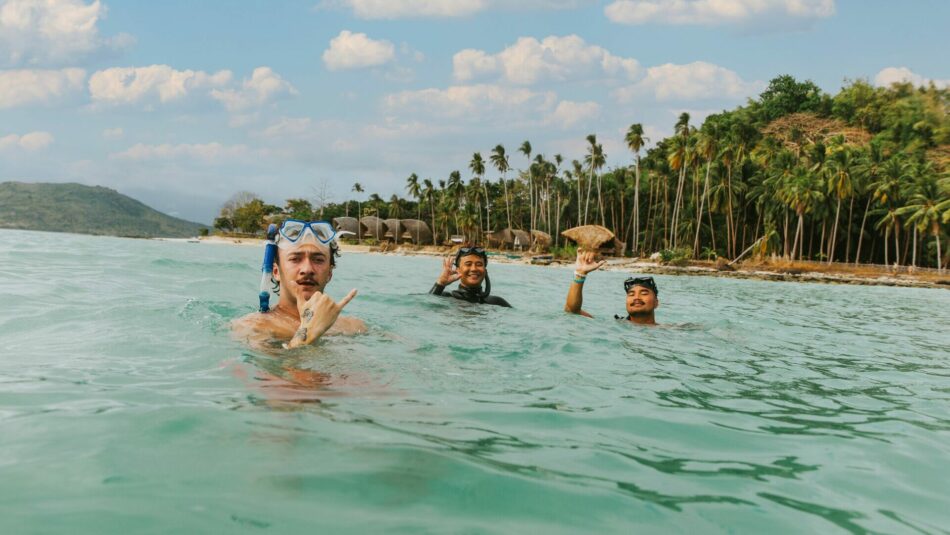
Image source: Contiki
2. Sabah, Borneo, Malaysia
Best time to visit: Any time during the dry season, which falls between March and October.
Sabah is a state of Malaysia located on the northern portion of Borneo, in East Malaysia. Sabah’s signature attractions range from nature-based activities like hiking, diving, visiting geoparks, and cultural attractions to promote the indigenous villages on the island.
Sabah is all about conservation and preservation making it an excellent holiday destination for sustainable tourism lovers. This tropical paradise has beautiful beaches, an abundance of marine life, and striking sunsets.
Wildlife safaris along the Kinabatangan River and Weston River give you the opportunity to see rare water bird species, fireflies, crocodiles, and if you’re lucky enough orangutans too. Inland you can explore the tranquil rainforest of Malaysia’s first UNESCO World Heritage Site and Geopark: Kinabalu Park.
In Kinabalu Park, thrill-seekers can conquer their fears on the world’s highest via ferrata, Mountain Torq, set dramatically along Mount Kinabalu’s Panalaban rock face. The walk starts at 3,200m above sea level and ends at 3,776m above sea level. If you’re into diving, a 45-minute flight from Kota Kinabalu will take you to Sipadan Island, renowned for being one of the world’s best dive sites. There’s 40 acres to explore, composed of corals, more than 3,000 species of fish, green and hawksbill turtles.
Pros and cons
Sabah is one of the best places in the world to spot orangutans and other rare, beautiful creatures. However, tourism facilities aren’t as developed as other parts of Southeast Asia, so finding reliable information isn’t always easy.
Top gems
Some of the main attractions on the island are: Maliau Basin, Bohey Dulang, Danum Valley Conservation Area, Mount Kinabalu and the Sepilok Orangutan Rehabilitation Centre.
Who is this perfect for?
They take the conservation of their rainforest and beaches seriously here, making it an excellent destination for sustainable tourism lovers.
3. Kuala Lumpur, Malaysia
Best time to visit: June to September will offer the warmest weather, but humidity is lower in December and January.
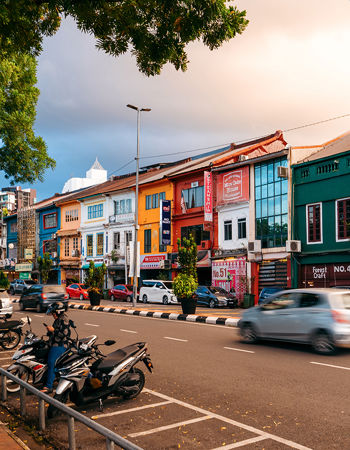
Kuala Lumpur, Malaysia’s capital city, has undergone rapid development in recent decades and is home to the tallest twin buildings in the world, the Petronas Towers. The Petronas Towers have become an iconic symbol of Kuala Lumpur and one of the main focal points around the city.
The Kuala Lumpur Central Market was built in 1888 originally as a wet market. Known to the locals as Pasar Seni, it is easily accessible on the major public transport lines and today is used as a centre for Malaysian culture, art, craft and cuisine. Getting off at Pasar Seni station, it’s a short walk to the market complex which has been newly renovated across 2023 and 2024. The market has a brand new Makan Hall (Food Hall), and an array of local shops, vendors and handicrafts.
The stalls rotate and feature locally made products from Malaysia. Here you can buy copper water vessels, traditional batik styled clothing, enjoy delicious local Malaysian foods like nasi lemak, asam laksa, and hydrate on fresh coconuts. There are also small stationery shops with brightly coloured postcards for sale. You can easily spend the afternoon here between the hustle and bustle of the market, taste testing more local treats, and spending the afternoon wandering around the old buildings, looking at graffiti temples and trying your luck to find the secret bars all around here.
Pros and cons
Kuala Lumpur is a regional hub for business, commerce, and technology, and has a huge majority of the benefits you would expect from developed western cities, including world class public transport. However, the bustling nature of the capital can be overwhelming.
Top gems
The Batu Caves, located a short train ride away from central KL, are also well worth visiting and are famous for the Hindu shrine of the God Murugan. The statue was unveiled in 2006 and took 3 years to construct. The statue stands at 43m tall, and behind it lie the famous rainbow-coloured stairs.
Who is this perfect for?
Culture vultures and foodies.
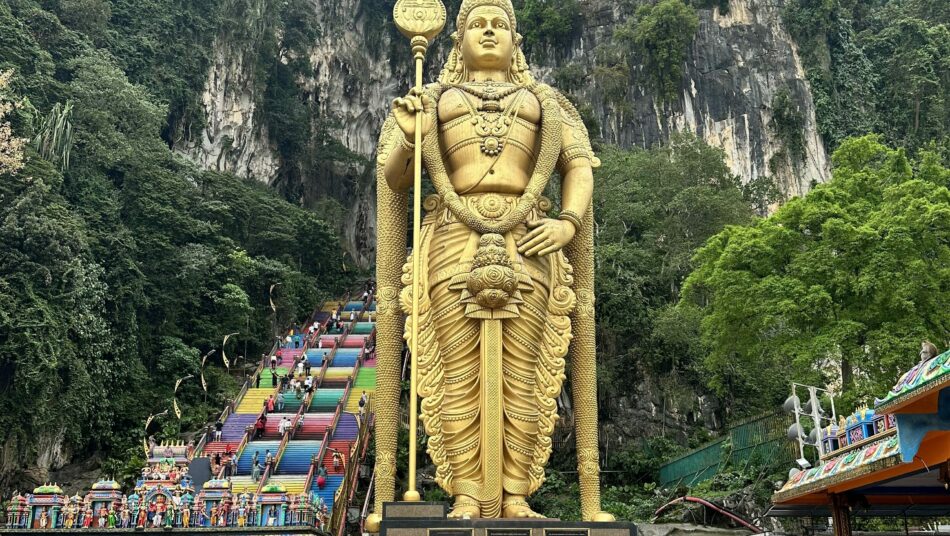
Image source: Rhiannon Bryant
4. Singapore City, Republic of Singapore
Best times to visit: Singapore is incredibly humid, but the humidity is less intense during February, March, and April.
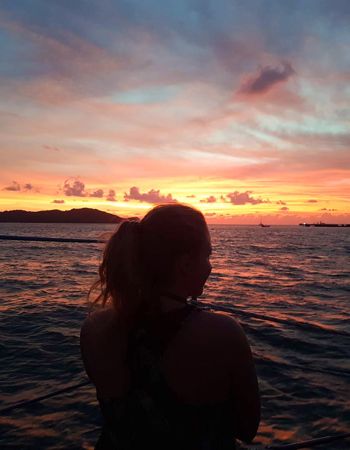
Singapore is a sunny, tropical city-state island off the Malay Peninsula, and is one of the smallest countries in the world. Singapore is surrounded by 62 smaller islands, and famous for being a global financial centre.
It’s one of the most densely populated cities in the world, but at the same time is balanced with being one of the greenest places in the world. Known for the Jewel Waterfall in Terminal 1 of Changi Airport, having the UNESCO World Heritage Site Botanic Gardens, and of course the boat shaped hotel, Marina Bay Sands. The Marina Bay Sands opened in 2010, and at this time it was deemed the world’s most expensive standalone casino property at $8 billion SGD. The resort includes 2,561 rooms, convention centres, a museum, a theatre, restaurants, and bars in the three sky towers.
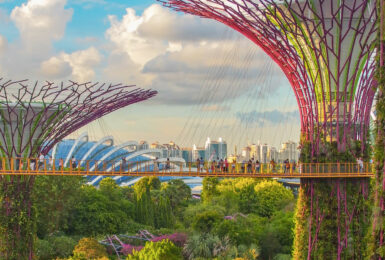
A must-do when in Singapore is heading to the SkyPark observation deck to see the incredible views of Singapore, or head to Cé La Vi for an afternoon refreshment and watch the sunset over the skyscrapers of the city. Below Marina Bay Sands is the iconic Gardens by the Bay, home of the cloud forest which hosts many interactive shows throughout the year, and in the Supertree Grove you can see the nightly light shows at 7:45pm and 8:45pm.
The best place in town to experience a Hawker food centre is Lau Pa Sat, every cuisine you could think of is available, and easily accessible by public transport: the most efficient way to get around Singapore. A few days is needed to explore the city so you can properly get lost in the alleyways that surround Haji Lane, Arab Street, and Bali Lane. Here you will find boutique shops, vintage clothing stores, record shops, bakeries with fresh sweets, authentic Persian rugs, handmade perfumes and oils, textiles and walls lined with graffiti.
Singapore’s maritime history as a bustling port city has shaped its vibe and skyline over the centuries. Dutch and Portuguese-inspired buildings, painted in vibrant colours, have transformed from merchant shops to residences and now to some of the city’s hottest tourist spots.Singapore is full of hidden pockets to explore like Little India and Chinatown, and definitely don’t skip the wonderful museums, the world’s first ever night zoo, sky walks and cable car, man-made waterfalls, and the famous Raffles built in 1887 by Sir Thomas Stamford Raffles.
Pros and cons
Singapore is safe, jampacked with cultural and natural attractions, and in many ways is more developed than many Western regions. However, this means it can be expensive, especially compared to other popular Southeast Asian destinations.
Top gems
Singapore has one of the best ratios of city size to top gems to visit in the world. There’s the UNESCO World Heritage Botanic Gardens, the boat-shaped Marina Bay Sands, stunning city views from the SkyPark observation deck, and the dreamlike Cloud Forest. Even Changi Airport is a destination, with sites like the Jewell Waterfall.
Who is this perfect for?
People looking for the ultimate city break or a fun, extended layover.
5. Krabi, Thailand
Best times to visit: Try to visit during the dry season (November to March) to ensure you get the best weather.
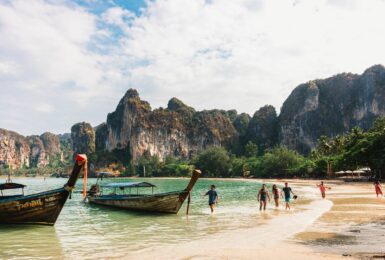
Known for its world class beaches, Krabi is definitely one of the best places to visit in Southeast Asia. Krabi has something for everyone – beaches, parties, hiking, lagoons, kayaking, Muay Thai, street food, rock climbing and more.
Just a short long tail boat ride away is the mesmerizing Railay beach, where you can enjoy the quiet beaches, explore the coastline and sip on fresh coconuts. Then head back to Aonang for an evening of street food at the Landmark Night Markets, watch the fire shows at Reeve Beach Club, bargain with the locals whilst shopping at all the local vendors, see live rock bands at Boogie Bar, and on the weekends witness the local Muay Thai fights happening at the stadium.
You mustn’t miss one of the most famous Buddhist temples in the south: Tiger Cave temple. There aren’t any tigers (sorry) but you will get one of the best panoramic views you’ll ever encounter! It’s a challenging 1,237 steps to the top, but totally worth it. This is a religious site, so templewear (shoulders and knees covered, loose clothing, covered mid-riff) is required once you reach the top.
If you’re after a challenging hike, you can try the Dragon Crest Trail (Ngon Nak Nature Trail), the round trip can take anywhere between 3-5 hours depending on your fitness levels. A nice easy walk can be found to the left of the main Aonang Beach, it’s called Monkey Trail and will take approx. 15-20 mins to walk over to the secluded private beach at Centara Grand.
Krabi Old Town is famous for its authentic flair. It’s best to visit the Old Town on the weekend to enjoy the local traditional markets, walk along the pier, explore the caves, or venture to some of the small Buddhist temples. Sound amazing? We’ve got plenty of Thai Island Hopper trips that’ll take you to Krabi and so many more gorgeous islands!
Pros and cons
A well worn tourist destination, Krabi is quite easy to navigate, with lots of reputable vendors for every activity. However, if a deal does seem too good to be true, it very well may be: there are scammers who prey on tourists.
Top gems
The Old Town is a real highlight, but as we mentioned above, don’t miss Tiger Cave Temple!
Who is this perfect for?
Those who want beachy vibes but still some civilisation and culture.
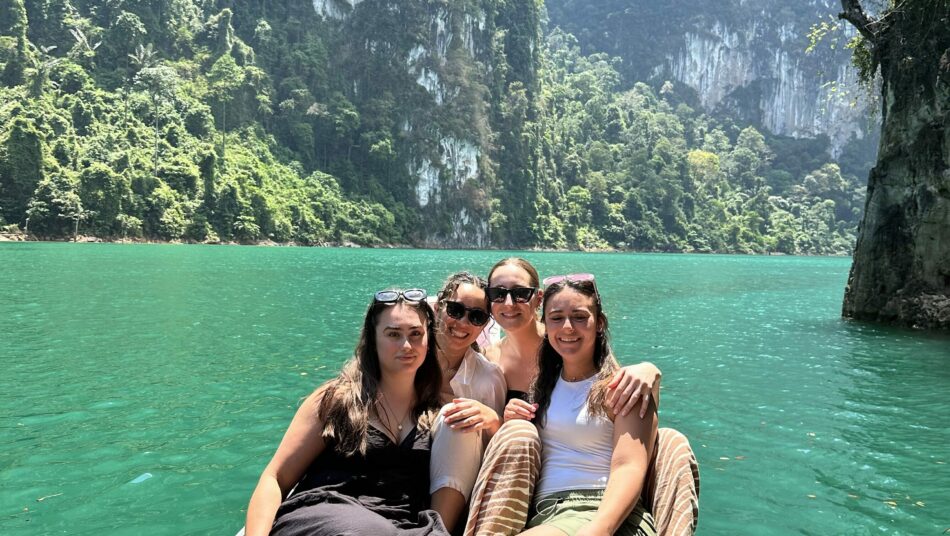
Image source: Rhiannon Bryant
6. Khao Sok National Park, Thailand
Best times to visit: Khao Sok is humid throughout the year, and the drier months of June through November are more comfortable to visit in.
Khao Sok National Park, located in Southern Thailand, is one of the most mesmerising sites the country has to offer. This adventure lover’s heaven is situated between Phuket, Krabi and Koh Samui making it an easily accessible destination in Southern Thailand. If you’re planning a trip, nearby Surat Thani serves as a transport hub, connecting some of Thailand’s top destinations by air, road, and sea.
Khao Sok National Park is said to be the remnants of one of the oldest rainforests in the world, dating back further than the Amazon Rainforest. Not only is the National Park full of rainforests, it has jungles, breathtaking views, limestone karsts, deep valleys, lakes, caves and many wild animals.
You can spend the afternoons exploring the jungle hikes and visiting Pakarang Caves (Coral Caves) full of stalagmites and stalactites. Khao Sok’s landscape blends tropical evergreen forest, and rainforest hosting about 200 different floral species per hectare marking it as a biodiversity haven. The rich habitat welcomes many species of wildlife including 48 mammal species, 311 bird species, more than 30 bat species, reptiles and insects, and last but not least, the unique Rafflesia, known for being the largest flower in the world.
Pros and cons
There are few places on earth that contain the diversity of scenescapes and wildlife that Khao Sok National Park does, making it a dream destination for many. However, the heat and humidity can be incredibly intense.
Top gems
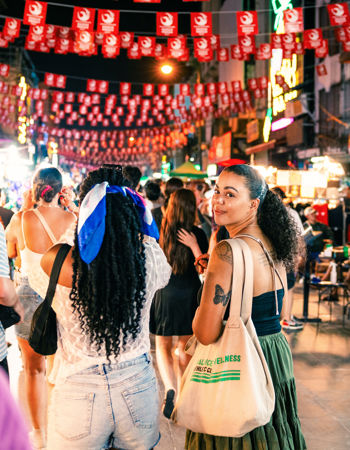
One of the most interesting and stunningly beautiful places to see in the National Park is Cheow Lan Lake. A man-made freshwater lake that offers overnight stays on floating raft houses and luxury tents.
Who is this perfect for?
Adventurers, animal spotters, plant lovers, and those who want to go off-the-beaten path!
7. Chiang Mai, Thailand
Best times to visit: If you arrive in April you’ll get the chance to experience Songkran or Thai New Year.
Hidden amongst the borders of the Golden Triangle (Thailand, Myanmar, Laos), lies a beautiful city in Thailand, Chiang Mai. One of the best times to visit Chiang Mai is during the high season, between November and April. February is one of the most vibrant months for the Chiang Mai Flower Festival, or if you go in April, you can witness Songkran (Thai New Year) for a wet and wonderful celebration with parades and water fights.
Chiang Mai is one of the most historically significant cities in Thailand, and was once the capital of the Lanna Kingdom (Kingdom of a million rice fields). Chiang Mai is now known as the culture capital of Thailand. Here you will find 33 Buddhist temples inside the walls of the Old City and one of the best bucket list items for Chiang Mai is Wat Chedi Luang. This Buddhist temple is still used for worship and practice today. Onsite you have the incredible opportunity to participate in Monk Chat: during the afternoon you can sit down and practice your Thai and help the Monks to practice their English.
When you stop in Chiang Mai, you’ll want around 3-5 days to explore the city and the surrounding areas. There are the Sticky Rice waterfalls, the Golden Stupa Doi Suthep, the National Park, street food tours, vespa tours, professional Muay Thai fights, lots and lots of markets (Saturday and Sunday walking street are the best), and a day trip to Chiang Rai to see the infamous White, Black and Blue Temples.
A must-try food in Northern Thailand is Khao Soi. An egg noodle soup in a curry paste broth, served with meat, topped with crispy fried noodles, pickled veg and fresh limes. For all this and more, Contiki’s Northern Thai Highlights is a must-do trip!
Pros and cons
Chiang Mai has an unmatched blend of culture, fun, and natural highlights. However, the historic centre can get incredibly busy, and in the heat this can be a fatiguing combination.
Top gems
The famous Bua Tong Sticky Rice Waterfalls, Doi Suthep and its stunning views, and of course the famous Wat Chedi Luang temple.
Who is this perfect for?
Anybody who wants to immerse themselves in a new culture.
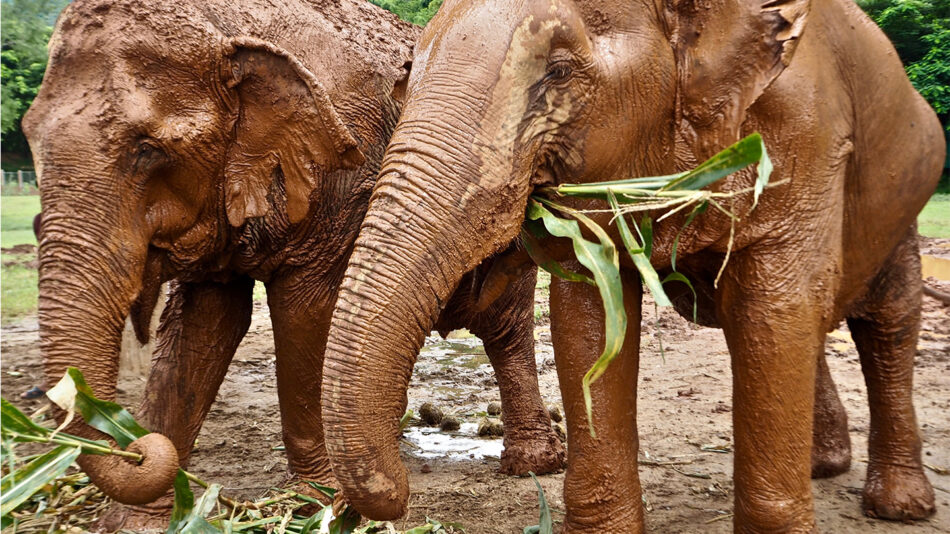
Image source: Contiki
8. Luang Prabang, Laos
Best times to visit: The cool, dry season takes place from November to March. Visiting during this time of year means less extreme heat and smaller chances of rain.
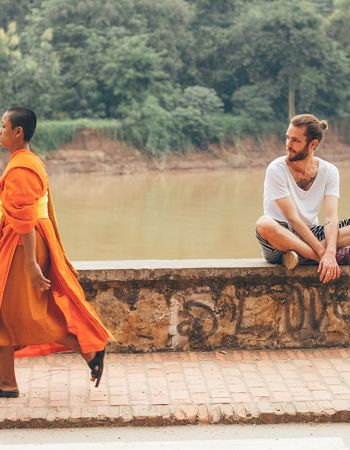
Luang Prabang is known as the cultural capital of Laos, situated on the fork of two rivers, the Mekong River and Nam Khan River.
Laos is a landlocked country heavily dependent on agricultural opportunities. What it lacks in beaches, it makes up for in lush rolling hills. The country is very mountainous with many different ethnic groups living along the river’s edge of the lowlands, the midlands and then the Hmong people who call the mountains home. Luang Prabang is a listed UNESCO world heritage site. The city is known for its French colonial styled buildings, beautiful Buddhist temples like Wat Xieng Thong, the romantic ambience and slow paced living. You can also head slightly out of the city to marvel at the Kuang Si Waterfalls.
Pros and cons
The more relaxed nature of the city means there is plenty of time to learn about Laos and its history and culture, as well as reflect on your travels. And, of course, the cuisine is unique in the best way possible. However, Luang Prabang can be a little more expensive than other parts of the country.
Top gems
Kuang Si Falls, the food, and generally just wandering around and taking in the unique architecture. If you can travel here from Thailand via slowboat you won’t regret it.
Who is this perfect for?
People who want a slice of Laotian culture, whether it be historical or contemporary.
9. Siem Reap, Cambodia
Flying into Siem Reap is an eye-opening experience to the vastness of Cambodia. If you have flown from the capital city Phnom Penh, or other neighbouring countries like Thailand or Laos, you will see the flat plains of Cambodia, lined with hundreds and hundreds of Cambodia’s national trees from your flight; Borassus Flabellifer, a type of palm tree, known as a Tnaot in Khmer language.
These trees are iconic to Cambodia, and the Khmer territory. And when you’re in Siem Reap, it’s time to visit the UNESCO World Heritage Site, Angkor Wat. It is the largest religious monument in the world, and the only building on a national flag. Angkor Wat is one of the most important archaeological sites of Southeast Asia, consisting of temples, basins, reservoirs, canals, and communication routes. For centuries it was the centre of the Khmer Kingdom.
Angkor Wat is historical proof of exceptional civilizations exemplifying cultural, religious and symbolic values, as well as containing architectural and artistic significance. Around the Angkor complex you will see lots of rice paddies. The communities who live in the complex area come from a long line of agricultural farmers who practised rice cultivation, their ancestors dating back to the times of Angkor.
A three-day pass for Angkor Wat is popular to explore all the ruins and temples, see sunrises and sunsets, explore Bayon temple with the many faces, or run through the ruins of Ta Phrom like you see on Tomb Raider.
Best times to visit
The winter period in the Northern Hemisphere has the best weather for visiting. In terms of time of day, the early morning is a magical time to first see the temples of Angkor Wat.
Pros and cons
There really is nothing like Angkor Wat anywhere else in the world, and visiting is a unique experience. However, it is also an ultra popular spot, so make sure to arrive early if you want some time without the crowds.
Top gems
Angkor Wat, of course! But outside of the famous monument, you can enjoy the nightlife on pub street, or wander through the vibrant night markets.
Who is this perfect for?
Honestly? Everyone.
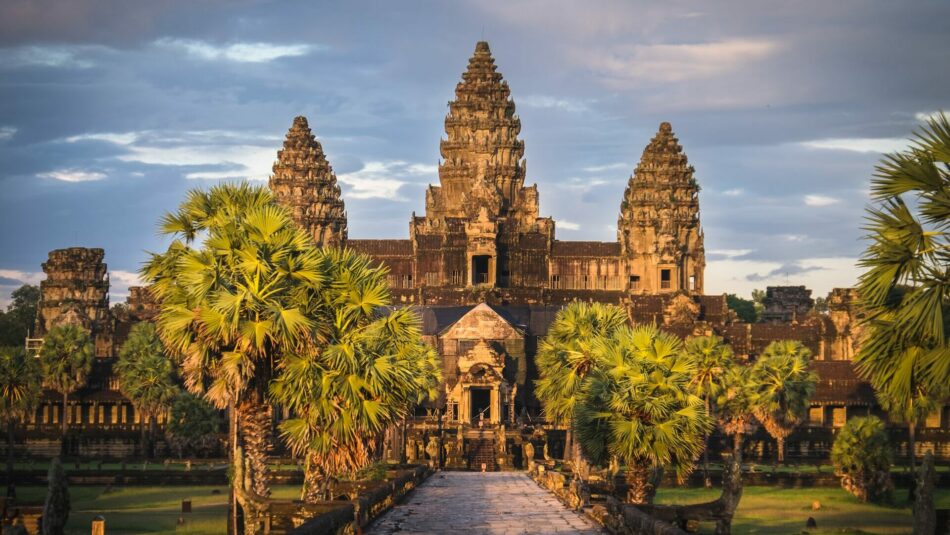
Image source: Contiki
10. Ho Chi Minh City, Vietnam
Best times to visit: The dry season, between November and February.
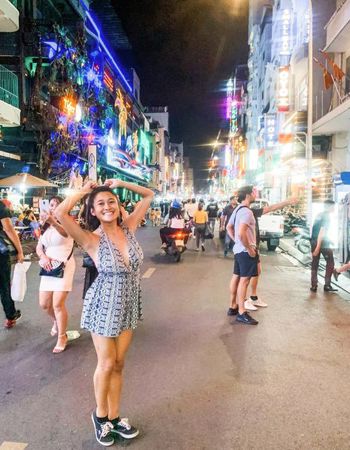
Ho Chi Minh City, formerly known as Saigon up until 30th April 1975, has long been one of the cultural, economic and political centres of Vietnam. Ho Chi Minh City’s dynamic cityscape draws together old and new Vietnam in the most compact of spaces which represent the city’s past and future.
HCMC is an easily accessible point in Vietnam to start off your adventures, close to the Mekong Delta to fully immerse yourself in local cultural experiences, day trips to the Cu Chi Tunnels and War Remnants Museum, and see the mesmerizing A O Show Bamboo Circus at the Saigon Opera House. With HCMC as your starting point, once you get used to the chaotic traffic, the delicious new cuisine, handling a new currency and navigating your way through the city, you’ll have the confidence to tackle the rest of Vietnam’s best destinations.
Pros and cons
Endless cultural and historical institutions, a mouthwatering culinary scene, and some of the best nightlife in Southeast Asia are just some of the reasons to visit Ho Chi Minh. However, if you’re not one for big crowds and plenty of stimulation, you might want to minimise your time here.
Top gems
Day trips to the Mekong Delta, the war tunnels, a trip to the Saigon Opera House: possibilities are endless in Vietnam’s largest city.
Who is this perfect for?
Someone who wants to feel the hustle and bustle of a big city, but still get a hit of Vietnamese culture.
11. Ha Long Bay, Vietnam
Best times to visit: December and January.
Ha Long Bay in northeastern Vietnam is a well-known UNESCO World Heritage Listed Site, and is famous for its limestone karts and mountains that rise up from emerald waters, formed thousands of years ago. It’s one of the most beautiful places to visit in Vietnam.
This archipelago of islands was named one of the ‘New 7 Natural Wonders’ of the world in 2011. The jaw dropping scenery in Ha Long Bay makes it a very popular destination for domestic and international travellers for day trips, or overnight stays on junk boats. As you sail through the limestone karst islands that surround you, you can’t help but feel you have stepped foot onto a movie set.
Ha Long Bay has hosted many film sets over the years, some of the most famous being Pan (2015) using the vast caves of Hang Son Doong with the underground rivers and reflecting pools which were perfect for bringing Neverland to real life; Kong: Skull Island (2017) and James Bond: Tomorrow Never Dies (1997).
Vietnamese folk stories say that the islands and islets of Ha Long Bay are the jewels that the dragon spat out when defending the Vietnamese against China. Ha Long translates to “descending dragon” to pay homage to the Mother Dragon for protecting the Viet people. Vietnamese people believe that they have dragon origins and that is why these creatures are used in storytelling and can be seen throughout history.
Pros and cons
Sailing in the bay is genuinely like being in a movie scene, and it’s incredibly easy to find a range of boating options to suit budgets and tastes. However, this is one of the busiest spots in all of Southeast Asia for tourism.
Top gems
The entire bay is amazing, with each little islet or jutting karst a gift for the eyes.
Who is this perfect for?
Anybody who wants to be wowed by nature.
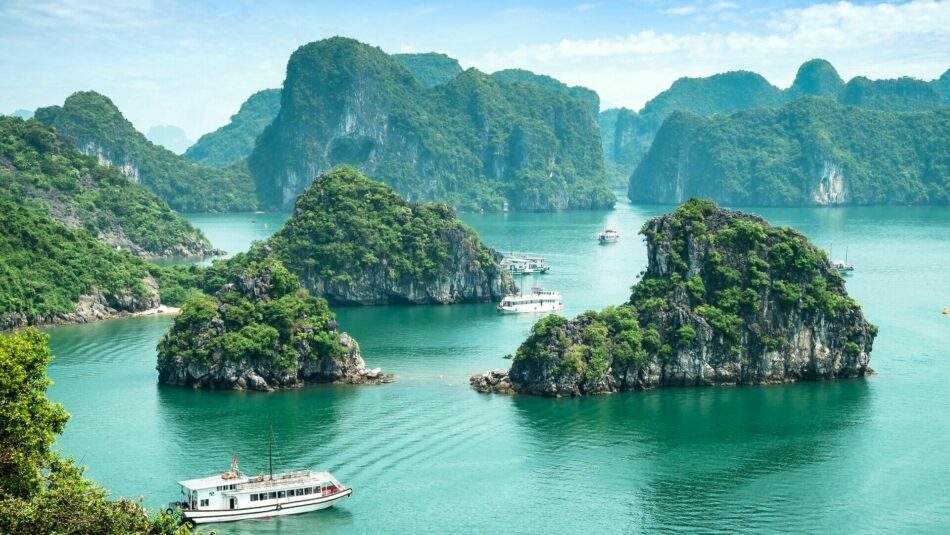
Image source: Contiki
12. Bali, Indonesia
Best times to visit: Bali has great weather year-round, but December and January are particularly pleasant, with a drier heat warming the air.
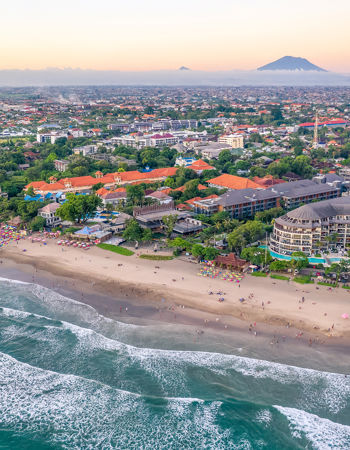
Indonesia is famous for its beautiful beaches, luscious green rice terraces, and snorkelling and scuba diving adventures, with Bali being an absolute hotspot for many tourists due to the adventure, culture and cheap eats.
From culinary delights in Canggu, surfing in Uluwatu or meditating in Ubud, you can easily spend weeks in Bali alone taking in all the different zones and the differences across each village.
Ubud in particular is a popular destination for yoga classes, health food cafes, retreats and getaways. You can live all your Eat, Pray, Love dreams here, and more!
Pros and cons
Bali has everything you could want in a destination, all packed into a relatively small island. You can hike volcanoes, go to a yoga retreat, party on the beach, and get incredible global and local food. However, it can be difficult to find more authentic experiences on the island.
Top gems
Two of the most beautiful rice terraces found in Bali are Jatiluwih and Tegallalang. There are also countless waterfalls in the north.
Who is this perfect for?
Wannabe yogis, young travellers looking for fun, older tourists keen on some luxury, and everything in between.
13. Flores, Indonesia
Best times to visit: December to March.
Although Bali is often regarded as the shining jewel of Indonesia, many are quick to overlook Flores which is just as stunning and even more untouched! These islands are incredibly unique and fewer tourists means you get the whole place virtually to yourself. Also, did we mention Komodo dragons? KOMODO DRAGONS! Though, keep a safe distance.
The waters are teeming with marine life so you can play true mermaids to your heart’s content and make some aquatic friends with manta rays and sea turtles. The main town in Flores is Labuan Bajo, which is a gateway to Komodo National Park where you can spot some of the aforementioned carnivorous beasts.
Pros and cons
Flores has gorgeous beaches (including Pink Beach!) and an abundance of wildlife, but it can be difficult to get to, and tourist infrastructure is not as well developed as somewhere like Bali or even Lombok.
Top gems
Diving in the coral reefs, marvelling at crater lakes, and of course seeing the magnificent Komodo dragons.
Who is this perfect for?
Animal lovers and surfers.
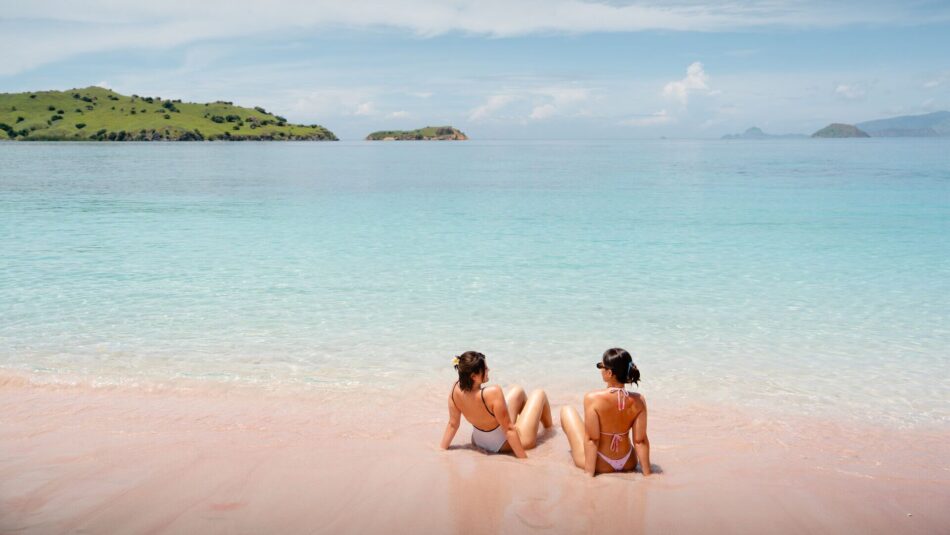
Image source: Contiki
14. Moalboal, the Philippines
Best times to visit: Any time between November and May is usually good to visit – the wet season is short but intense, so it is best to avoid.
Located on Cebu island in the east of the Philippines (which you can island hop with ease thanks to Contiki!), Moalboal is well worth a visit when you’re trotting around Southeast Asia.
Dreamy beaches, obviously, crystal clear water, of course, and lots of fresh and delicious local foods and the friendliest local people will have you wanting to come back again and again.
Snorkelling, diving, and sailing are all available as well, so there are just endless things to do and see around this eastern section of the paradise-like country.
Pros and cons
Moalboal is much better connected than many other similar spots in the Philippines, so you can combine natural beauty with a convenient trip. Moalboal can be relatively expensive, though, thanks to this accessibility.
Top gems
Highlights of Moalboal include the turquoise Kawasan Falls, and the sardine runs that you can catch a shimmering glimpse of just off the shores of Panagsama Beach.
Who is this perfect for?
Lovers of lazy beach days, marine life explorers, and anyone who just wants to relax.
15. Phuket, Thailand
Best times to visit: From late October until March is best to visit, as it will be drier.
Yeah, there’s a lot of Thailand on this list, but can you blame us? There’s a reason Season 3 of The White Lotus decided to base themselves here. It’s the most perfect location ever and Phuket never fails to disappoint.
Phuket is an island and there’s soooo much to do. All your classics, really, including the exciting full moon parties. But we’re talking about the actual city. Did you know it was a city? Now you do. It’s gorgeous: pastel-coloured houses along Thalang Road evoke rainbows and sunny days as you stroll around shoveling mango sticky rice into your mouth. San Chao Jui Tui is a red and gold Buddhist temple that you can visit and receive an education from the monks, and Phuket Old Town is filled with archways and architecture reminiscent of China’s sloped gabled temples. You also cannot miss the night market for your taste of Thai street food and a great day out.
Pros and cons
Breathtaking vistas, impossibly fun full moon parties, delicious food: Phuket really does have everything. However, it is very popular, so if you’re looking to get away from it all there are only a few completely isolated spots left here – although they do exist!
Top gems
San Chao Jui Tui is a red and gold Buddhist temple that you can visit and receive an education from the monks, and Phuket Old Town is filled with archways and architecture reminiscent of China’s sloped gabled temples. You also cannot miss the night market.
Who is this perfect for?
Those keen to have an iconic Southeast Asian experience.